
TravelPal App
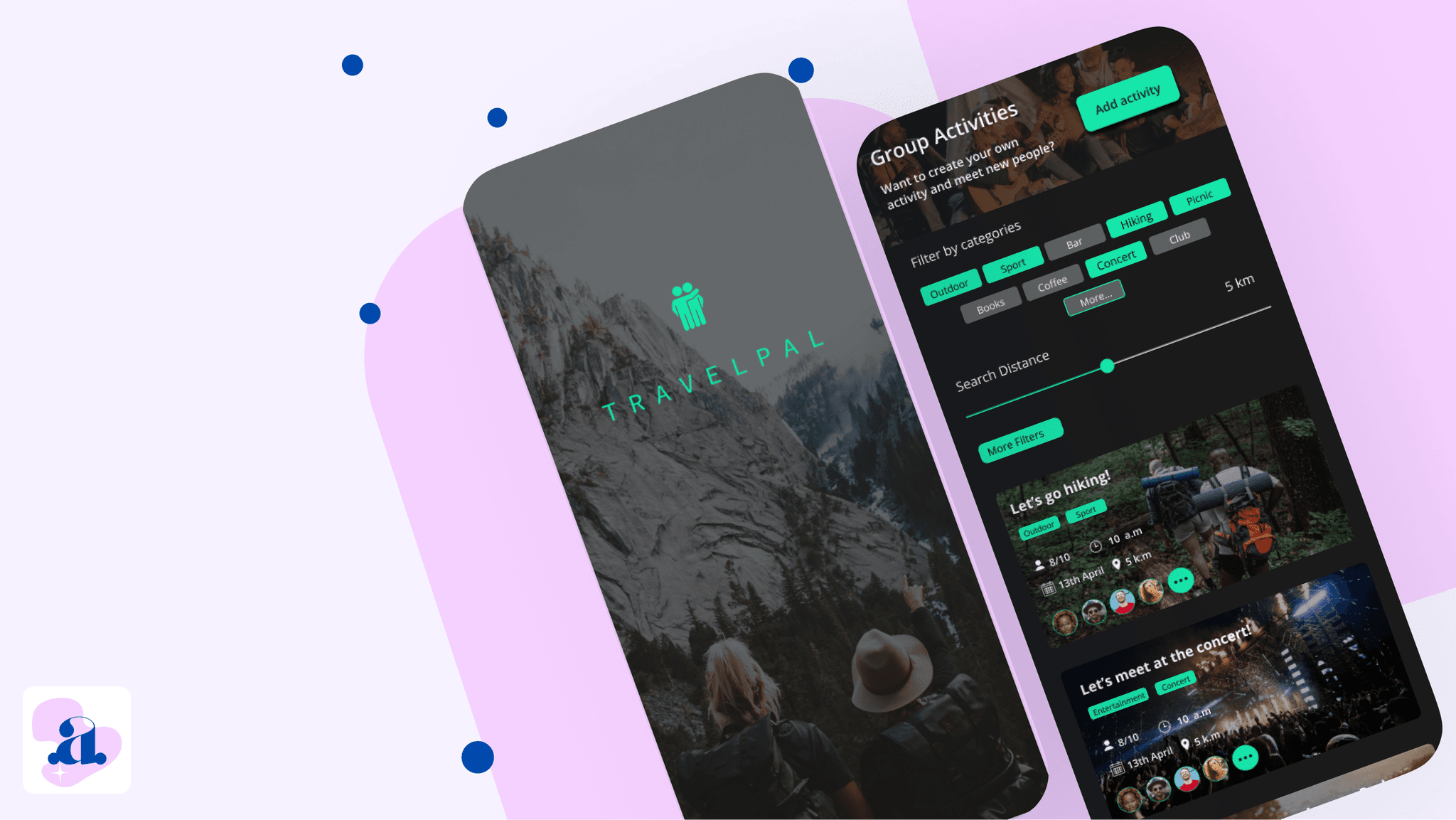
During my studies at Fontys University of Applied Sciences (ICT and Media Design), I participated in the Smart Mobile semester, where I applied design thinking to explore and develop concepts for various challenges. In this project, I collaborated closely with a classmate to design an app for travelers who want to easily meet new people and discover activities when visiting a new country.
4 weeks - 2022
UX/UI Designer
Eindhoven
Challenge
The goal of this project was to solve a specific problem for our chosen persona, Johnnie, a traveler. Johnnie needed an app that would help him discover activities and meet new people while exploring a new country. Over four weeks, we applied the full Design Thinking process to understand his pain points, explore opportunities, and create a solution that would make traveling more social, engaging, and enjoyable.
Process
During this project, we followed all stages of the Design Thinking process: Empathize, Define, Ideate, Design, and Test. We applied various research methods to define the problem, identify user pain points, generate ideas and features, and ultimately create a prototype for testing with potential users.
As part of the design phase, we created the app logo from scratch and developed a style guide including colors and typography, which guided the Figma design of the mobile app and ensured visual consistency throughout the interface.
Trello was used to organize tasks and track progress.
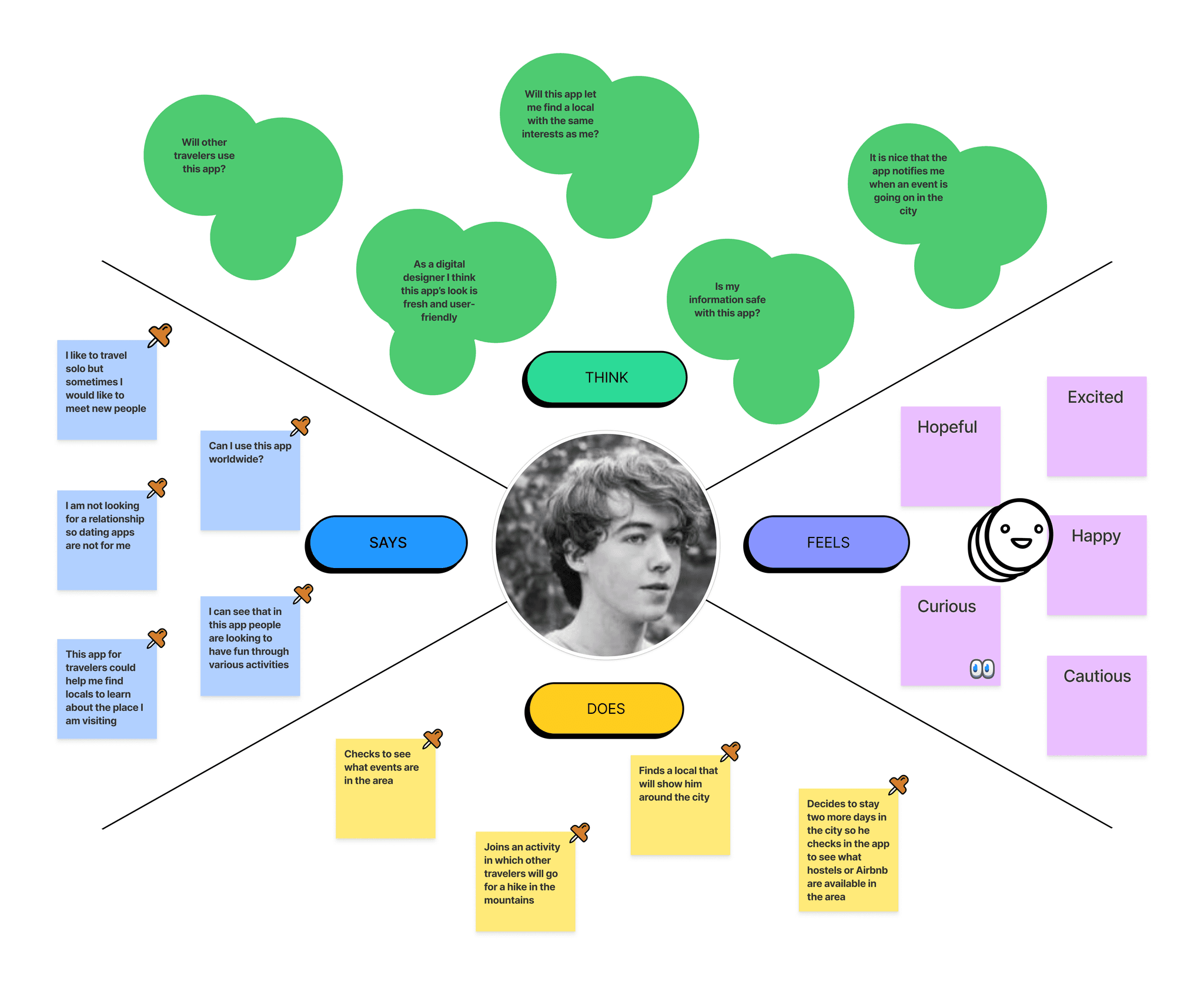
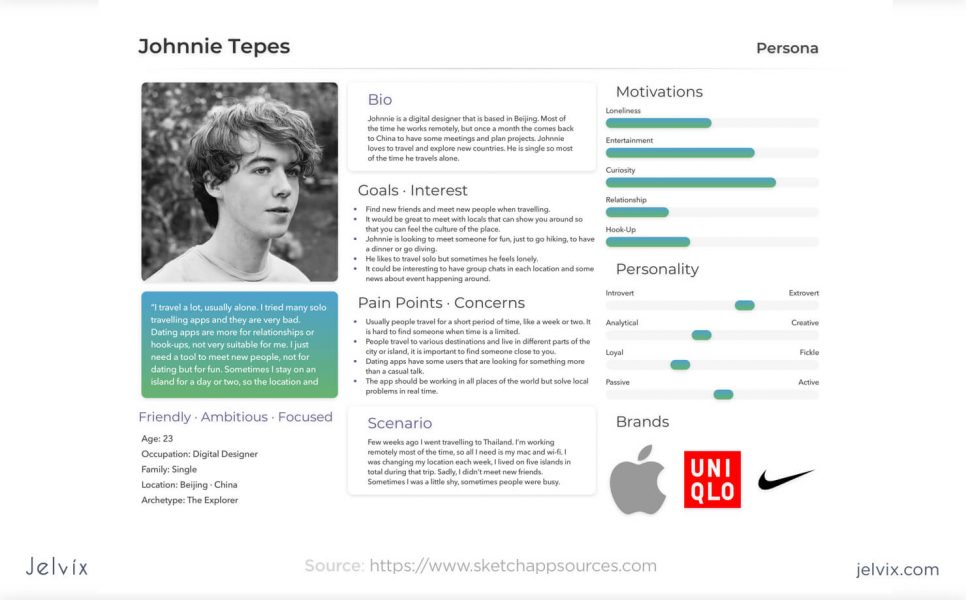
Empathize: To understand our persona, Johnnie, a solo traveler who sometimes feels lonely, we applied research methods such as empathy maps and user scenarios. I also created a visualization of the persona to clearly understand him. These tools helped us uncover his pain points, motivations, and goals, particularly his need to find activities and meet new people while traveling.
We performed a competitor analysis to evaluate existing apps and identify opportunities to improve our concept. Being travelers ourselves made it easier to empathize with Johnnie and connect with his challenges and preferences.
Define: From the research insights, we defined the core problem: Johnnie needed a solution that would help him easily discover activities and meet new people during short trips. This clear problem definition guided all subsequent ideation and design decisions. We created a document for defining the problem and concept.
Ideation phase: With the problem defined, we explored solutions using brainstorming and sketching. These methods helped us generate multiple app concepts and features aimed at addressing Johnnie’s needs. The best ideas were refined into a concept that served as the foundation for our interactive prototype.
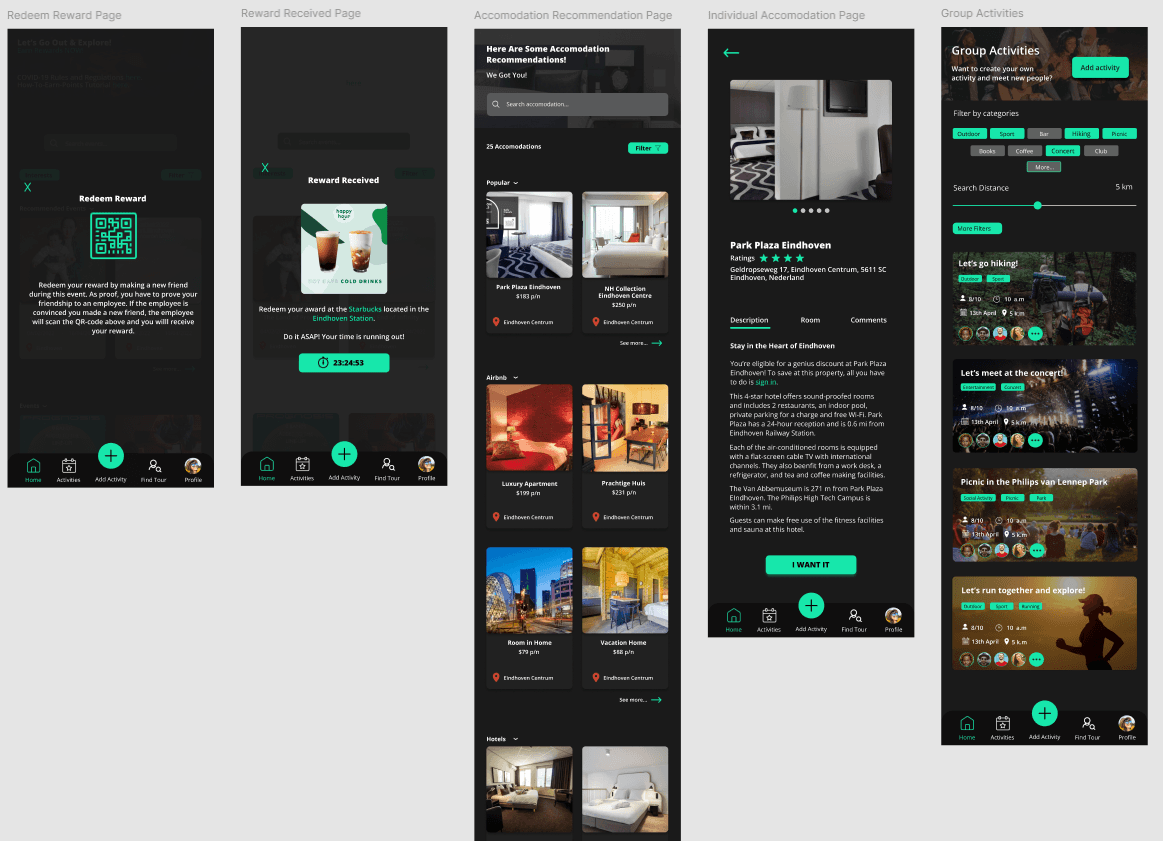
This application helps travelers discover events and activities based on their GPS location, showing the nearest and latest happenings in the city, country, or island they are visiting.
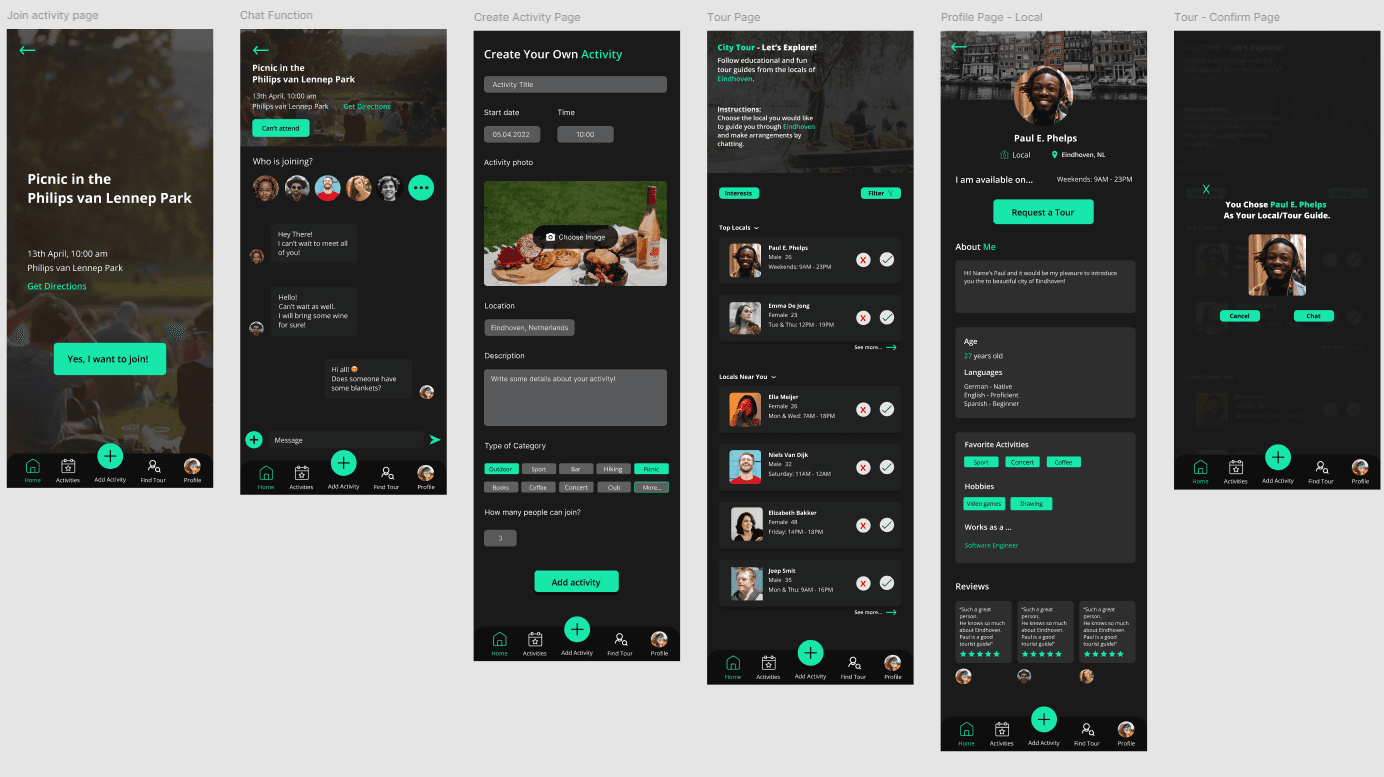
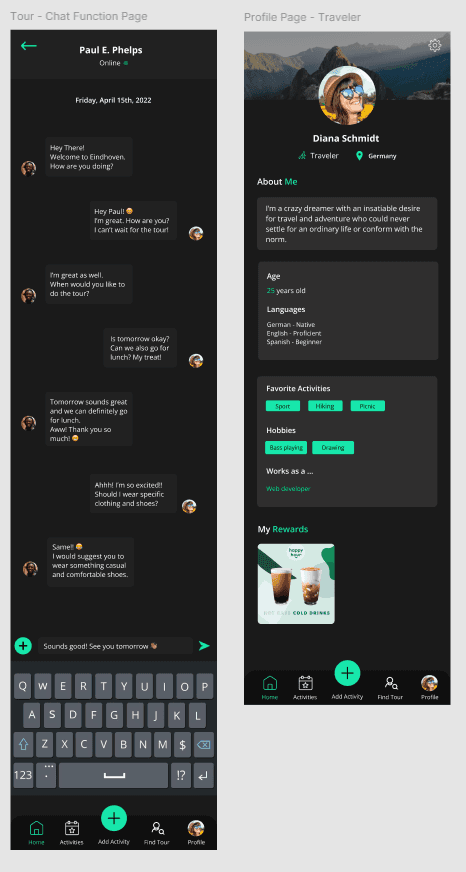
A key feature is group activities, allowing travelers to join events with a limited number of participants. Each group activity includes a chat feature so participants can stay connected before, during, and after the event.
The app also includes a rewards system, where users can earn rewards, such as discounts or free meals, by attending certain events. Additionally, travelers can join local-guided tours to experience authentic cultural insights. Users receive notifications when they are near an event to ensure they don’t miss opportunities.
Overall, the app addresses the challenge of finding people to socialize or participate in activities with during short trips, making travel more engaging, social, and convenient.
Design: Throughout the design process, we constantly asked ourselves “Who are we designing for?” Once we had a clear understanding of our persona, we began sketching and visualizing app concepts that would meet their needs.
My collegue and I brainstormed ideas and created sketches to define the app’s look and feel. Accessibility and usability were key priorities: the app needed to work for travelers of all ages, with a logical and smooth flow between screens.
We collaborated closely throughout the project, jointly brainstorming ideas and designing key screens together, while also individually working on specific screens to efficiently progress the app. This approach ensured a consistent, cohesive design across the app while using both of our strengths
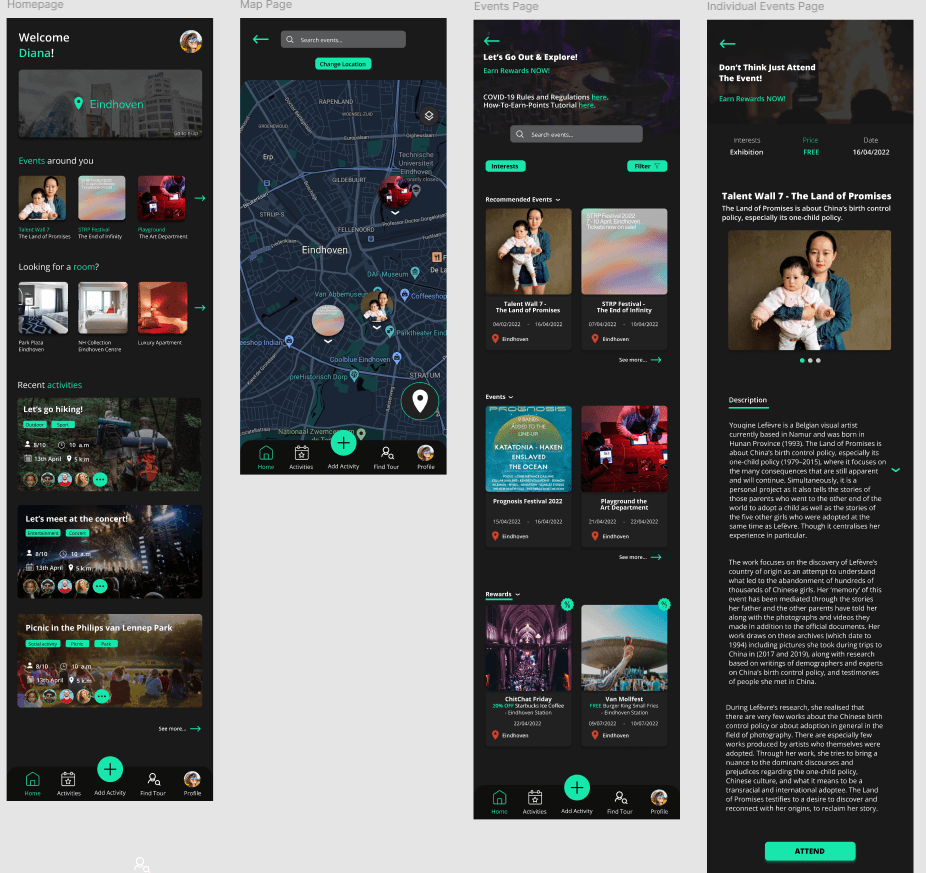
We used Figma to bring our ideas to life, designing an interactive prototype that reflected both the persona’s needs and our own experiences as travelers. This approach allowed us to create an app that is user-centered, intuitive, and enjoyable to use.
Test: To validate our design decisions, we conducted usability testing sessions with five classmates at the University. Involving peers allowed us to gain practical feedback and learn from real users in a collaborative environment.
The testing sessions highlighted areas for improvement, such as renaming the button “Find Local” to “Find Tour”, which users initially found confusing when trying to access the Tour Page. Feedback like this guided quick iterations, helping us refine the app and ensure a more intuitive user experience.
Conclusion
Collaborating closely as a duo, we designed a user-centered travel app that helps solo travelers discover activities and meet new people. Applying Design Thinking from research to prototype, we iterated based on usability testing to create an intuitive, accessible, and engaging app with a cohesive visual identity built from scratch.