Airport Parking Website
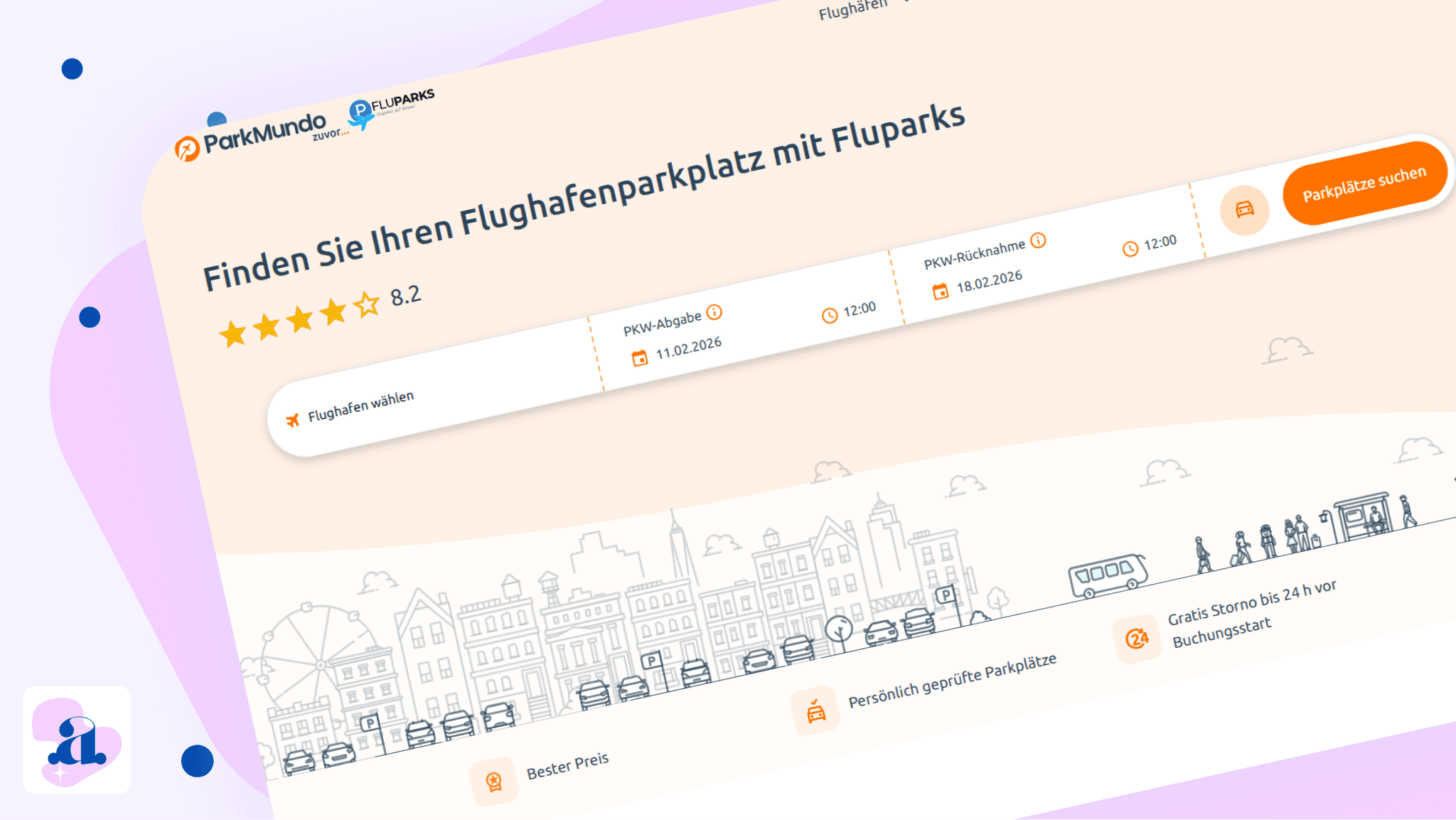
ParkMundo (previously ROOSH.), a company located in Eindhoven, Netherlands, takes the stress out of airport parking for travelers worldwide. Their platform simplifies the process by allowing users to search for parking availability, compare options, and book their choice directly. ParkMundo isn't limited to the Netherlands; they operate in over 14 countries across Europe, Australia, and North America.
ParkMundo
Feb 2024 - Feb 2026
UX/UI Design Intern (Feb 2024 - Jul 2024)
Junior Designer (Sep 2024 – Feb 2026)
Eindhoven, Netherlands
Challenge
At the start of the project, their existing websites were over ten years old and built on outdated technology, making them difficult to maintain, scale, and extend. Over time, the platform had grown without a structured approach, resulting in an inconsistent design system and multiple user experience issues. The company recognized that the current setup was limiting and no longer met evolving user needs or industry standards, prompting the need for a visual and structural redesign.
After transitioning into a full-time role, the scope of the project expanded. In addition to improving the customer-facing website, the company aimed to redesign its internal employee dashboard, which was outdated and difficult to use. At the same time, a full rebrand was initiated to give the company a fresh, modern look and strengthen user trust across all touchpoints.
Process during the internship
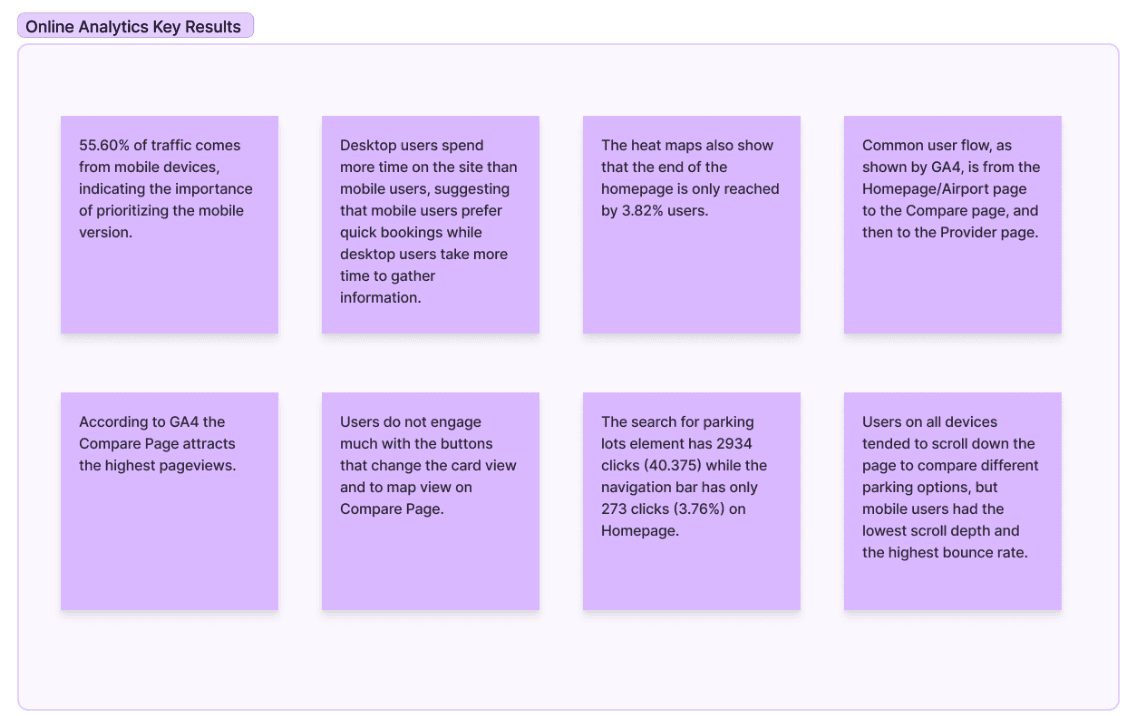
During my internship, the project focused on redesigning both mobile and desktop versions of the website while meeting stakeholder and business requirements. A design thinking approach was used, guiding the project through these phases: analysis, ideation, design, and testing. Throughout these phases, I applied various CMD research methods, including interviews, personas, heuristic analysis, online analytics, and competitor research, to inform design decisions and iteratively refine the solution.
Analysis phase
The analysis phase focused on gaining a deep understanding of the company’s context, current challenges, and project goals. A problem analysis was conducted to assess the existing situation, identify pain points, and define clear project requirements. The insights gathered during this phase formed the foundation for the Project Plan and guided all subsequent design decisions.
To align the project with business and stakeholder expectations, I conducted stakeholder interviews to gather design requirements and understand priorities, constraints, and success criteria. In parallel, I performed a heuristic evaluation of the existing website to identify usability issues, inconsistencies, and areas for improvement.
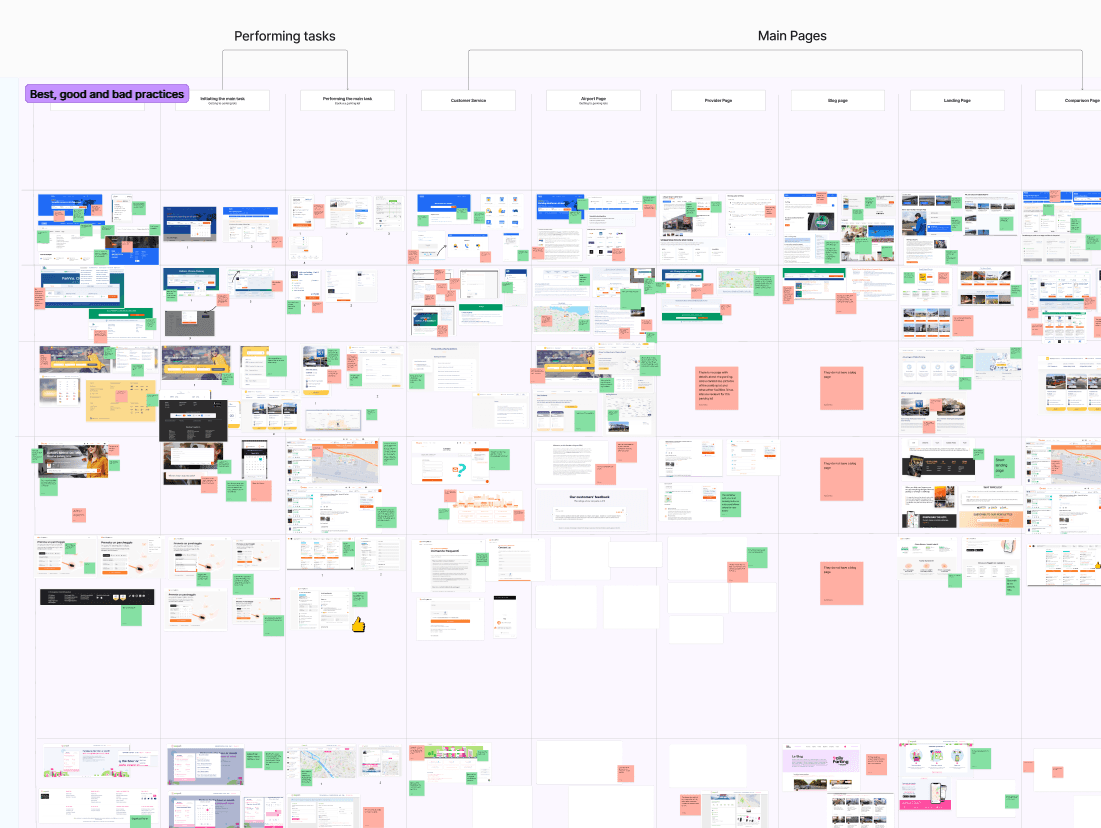
Additionally, a competitor analysis was carried out by reviewing direct competitors to evaluate their strengths and weaknesses. This helped identify industry patterns, uncover gaps in the market, and draw inspiration for features and best practices that could be adapted or improved upon in the redesign.
Empathize phase
The empathize phase focused on understanding user behavior, pain points, and expectations when interacting with the existing website. To achieve this, I conducted five usability testing sessions with real users. Participants were asked to complete predefined tasks while I tracked task completion time and observed their interactions. This data served as a baseline for later comparison with the redesigned solution, allowing improvements in efficiency and usability to be measured.
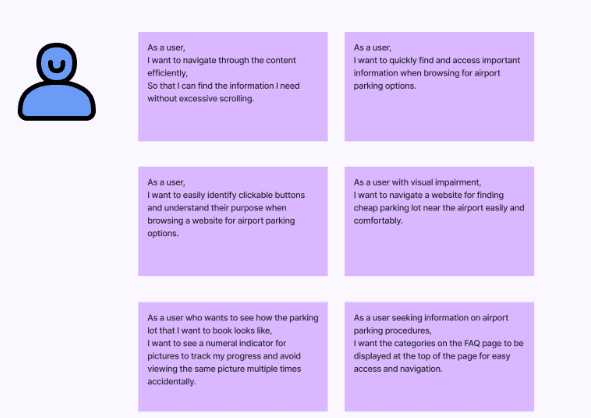
In addition to quantitative insights, the sessions revealed qualitative feedback, usability issues, and user recommendations. Based on these findings, I defined clear user requirements and translated them into user stories to capture user expectations and guide design decisions.
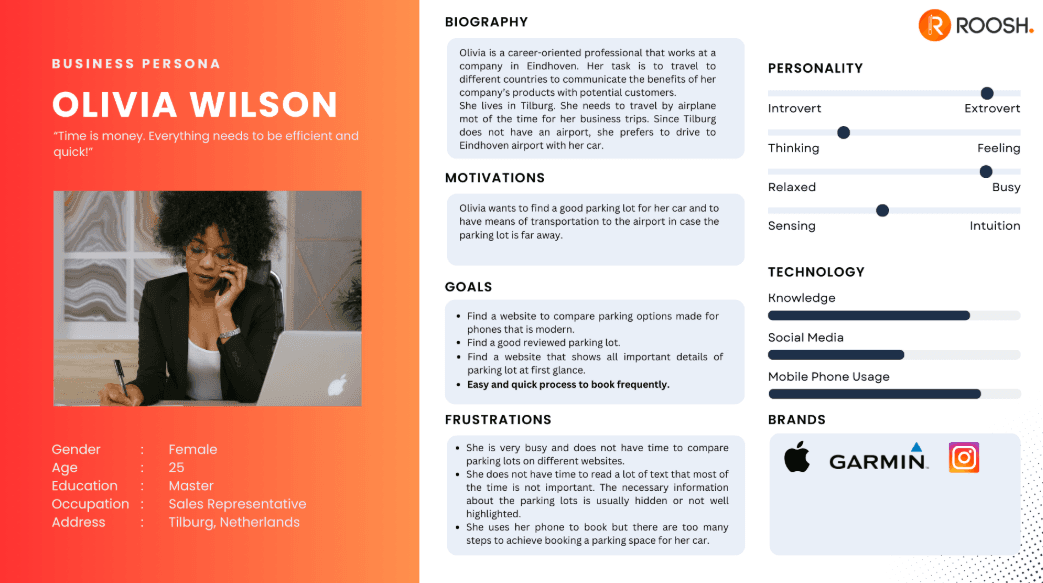
To ensure the solution addressed diverse user needs, I created personas following the insights from usability testing, stakeholder interviews, and defined user requirements.
Challenges and constraints
One of the main challenges during this phase was the limited access to actual customers of the platform due to privacy and data protection restrictions. As a result, I was not able to directly recruit existing users for usability testing. To address this, I carefully selected participants who closely matched the target audience profile, ensuring they represented potential users with similar goals and behaviors.
Design research
The purpose of the design research was to explore current trends and identify best practices in the industry. During this phase, I conducted an analysis of best, good, and poor design examples, as well as a trend analysis, to better understand emerging patterns and standards that could inform the redesign.
Ideation phase
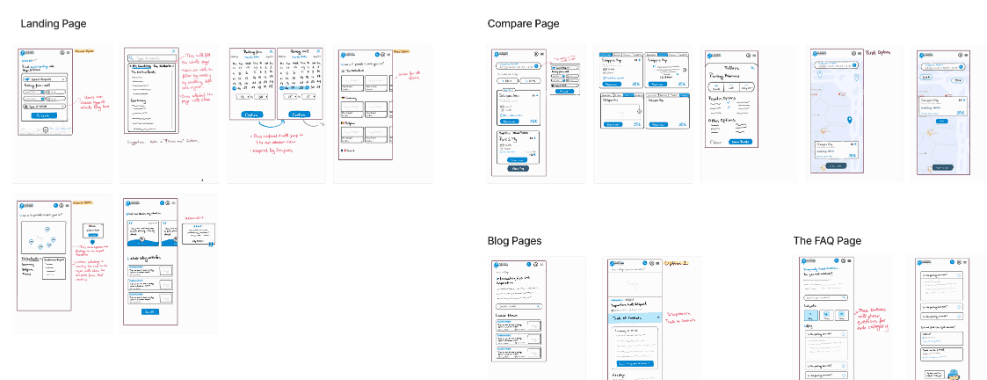
After synthesizing research insights, I translated key findings into design concepts. I created an inspiration wall to guide the visual direction and developed sketches to explore solutions and validate ideas with stakeholders early on.
A low-fidelity prototype in Figma was built to demonstrate core features and user flows. Through a co-reflection session with stakeholders, feedback was gathered and aligned before moving into high-fidelity design.
Design phase
Based on the insights gathered in the previous phases, the design phase began with the creation of a style guide defining colors, typography, and the overall visual direction to ensure consistency across the platform.
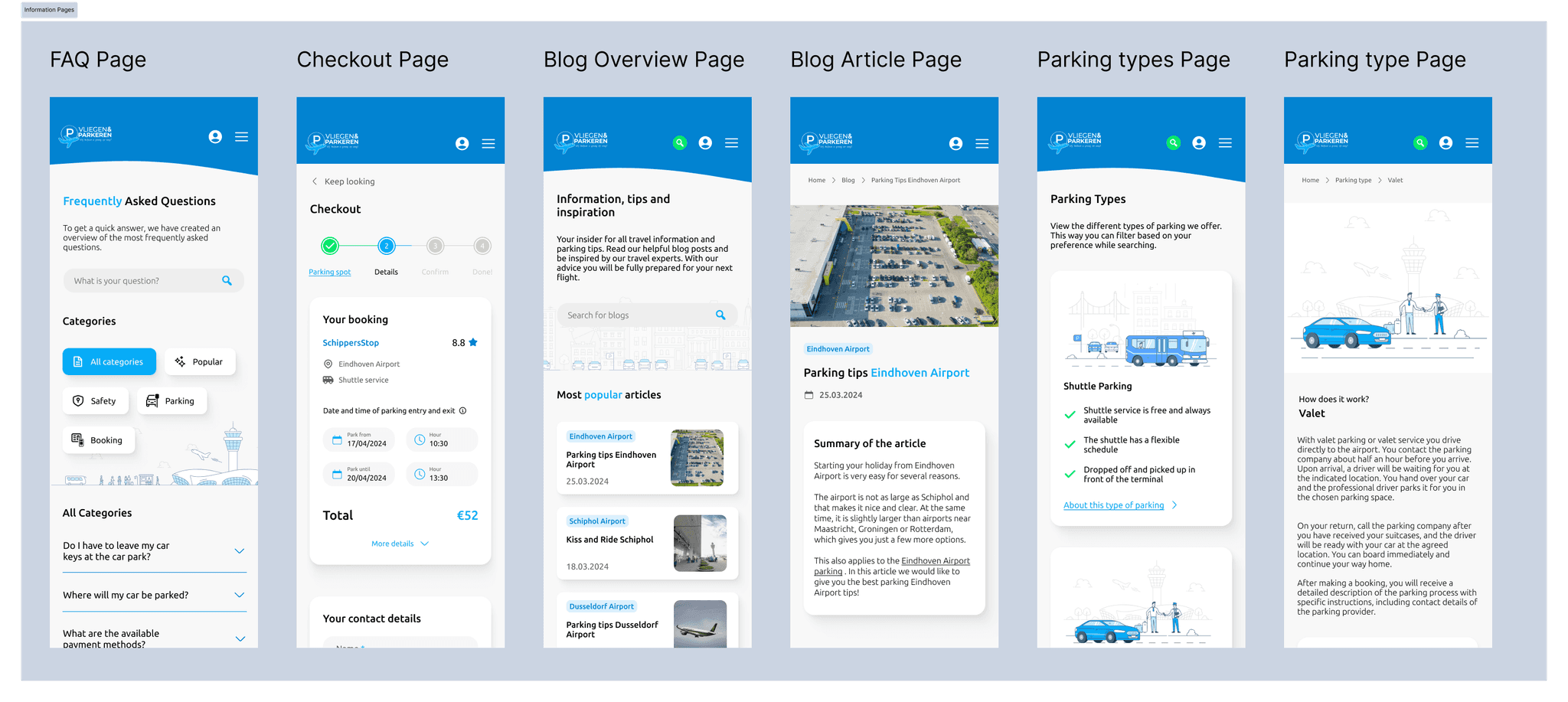
I then developed a high-fidelity interactive prototype in Figma, allowing stakeholders to explore key flows and features. The prototype was built using variables, shared styles, and interactive components to maintain consistency and scalability. It also served as the foundation for the testing phase.
Several improvements were implemented based on research findings and user feedback:
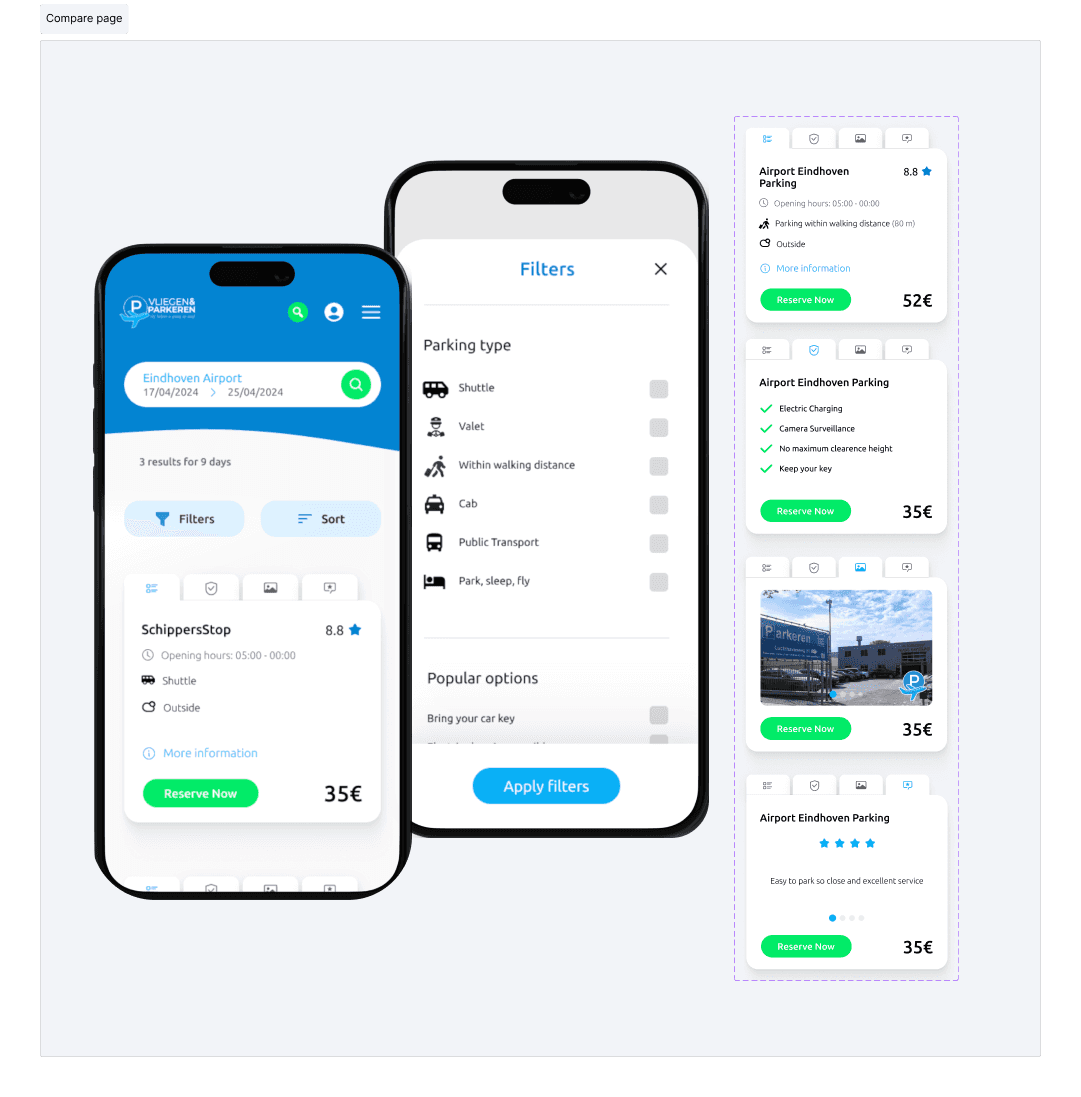
A new parking lot information card was designed using tabbed sections (e.g., General, Reviews, Facilities) to allow users to quickly access key information without accessing the detailed page. Based on competitor analysis, this structured overview was not previously implemented in the industry and aimed to improve clarity and decision-making efficiency.
A search bar was added to the blog overview page, categories were removed according to stakeholder requirements, and sorting by airports was introduced.
Breadcrumb navigation and a fixed top navigation bar were implemented to improve orientation and accessibility.
Font size was standardized to 16px to enhance readability.
Illustrations were introduced to add personality and engagement, informed by trend analysis.
Buttons were enlarged to improve usability on touch devices.
A global search icon was added to the navigation bar, inspired by competitor analysis, to provide quick access from any page (to be validated in testing).
After completing the prototype, I conducted a co-reflection session with stakeholders to present the solution, gather feedback, and align on final adjustments. Based on this feedback, further refinements were made before moving into the testing phase.
Testing phase
After completing the high-fidelity mobile and desktop prototypes, a structured test plan was executed to validate usability improvements. The methodology combined quantitative and qualitative usability testing, including think-aloud sessions and benchmark comparison (time-on-task and task completion rates).
Five usability tests were conducted for the desktop prototype to measure performance against the previous website and evaluate the modernity of the new design.
Results showed faster task completion across most scenarios (except the homepage/search task). All participants perceived the redesign as a clear improvement and describing it as cleaner, more modern, visually appealing, and easier to use. Information structure was considered significantly clearer, and the new tabbed provider cards were particularly appreciated for enabling quick access to key details.
Based on user feedback and identified friction points, additional iterations were implemented before finalizing the internship deliverable.
Conclusion
The redesign of the airport parking website of ROOSH. (now ParkMundo) desktop and mobile websites successfully met stakeholder requirements while modernizing and improving the user experience. By applying a range of CMD research methods, the project delivered measurable improvements in usability, clarity, and overall visual appeal.
The new design was well received by stakeholders and test participants. The project was completed successfully, earning an outstanding grade for the internship. The company was highly satisfied with my contributions and offered me a full-time contract, marking the transition from intern to Junior UX/UI Designer.
Full-Time Role
After transitioning to a full-time Junior UX/UI Designer, I continued to develop and expand the website project. I created a design system from scratch in Figma, using variables and components to ensure scalability, consistency, and ease of future updates. I also implemented and improved features requested by stakeholders, working closely with developers to deliver a fully documented design ready for implementation.
In parallel, I redesigned the internal dashboard, using the ShadCN design system to modernize the interface, improve usability, and unify previously inconsistent patterns.
I also led the company’s rebrand, working on the new visual identity. This included designing the new logo, updating the website colors, and creating visual assets for marketing, presentations and other touchpoints. Additionally, I collaborated closely with the marketing team to design ads for Google and Meta, ensuring visual consistency and brand alignment across campaigns.